
As privacy regulations continue to evolve globally, businesses involved in B2B market research must maintain the highest standards of data protection and confidentiality.
Data collected through B2B research often includes highly sensitive business and professional information. Decision-makers, executives, and industry professionals participating in research studies expect their information to remain secure and confidential. This blog explains what qualifies as sensitive data in B2B market research, best practices for handling personally identifiable information (PII), and how anonymisation and pseudonymisation help reduce the risk of identifying respondents.
Personal data refers to any information that relates to an identifiable individual. In B2B market research, this can include information connected to business professionals such as:
Personal data can exist in many forms including written, numeric, photographic, audio, or digital records. Even in B2B studies, identifying someone may not always be straightforward. Multiple data points combined together can unintentionally reveal a participant’s identity.
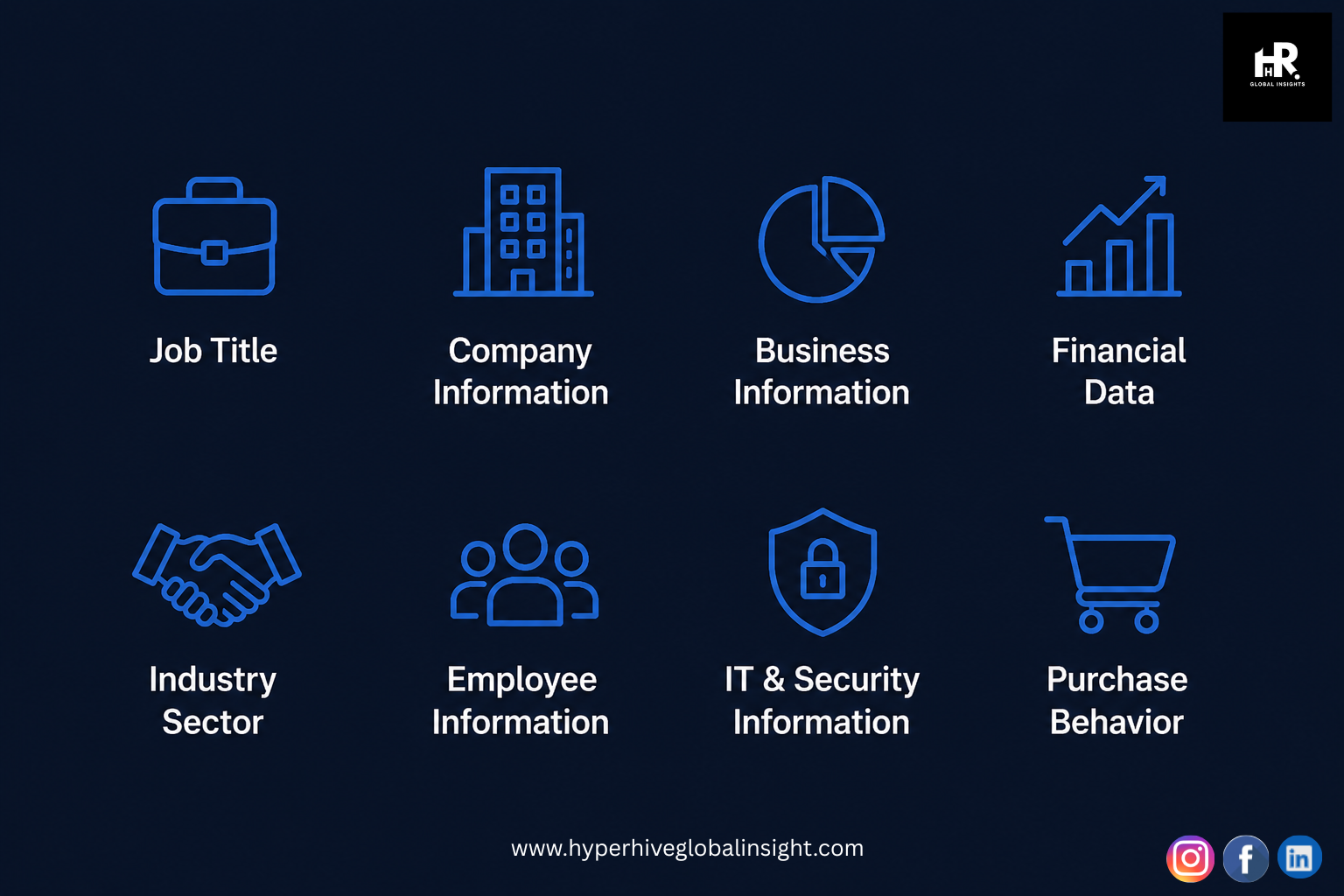
For example, in a B2B screener survey, information such as:
may appear harmless individually, but when combined, could identify a specific professional or organization.
Because of this, every data point collected during research should be carefully reviewed to assess identification risks.
While B2B research typically focuses on businesses rather than consumers, sensitive data can still be collected during studies. This may include:
In some cases, B2B studies may also involve special category personal data depending on the target audience or research topic. Such information is subject to stricter compliance requirements and should only be processed with proper consent and security measures in place.
Examples of sensitive B2B data include:
At Hyper Hive Global Insights, protecting respondent confidentiality remains a top priority across every market we operate in. Regulations such as GDPR and other international privacy frameworks provide strict guidance regarding the collection, processing, and sharing of personal data.
As a best practice, identifiable respondent information should never be shared with clients or third parties unless absolutely necessary and supported by participant consent.
Examples where identifiable data sharing may occur include:
In all such scenarios, respondents should be clearly informed beforehand and explicit consent must be obtained.
To minimise identification risks in B2B market research, two important privacy protection techniques are commonly used: anonymisation and pseudonymisation.
Anonymisation involves permanently removing all identifiable information from the dataset so individuals or businesses can no longer be identified.
Pseudonymisation replaces identifying details with unique IDs or reference codes. Although pseudonymised data is still considered personal data under privacy laws, it significantly reduces identification risks.
Using anonymisation and pseudonymisation in B2B market research provides several important benefits:
These techniques reduce the likelihood of identifying individual respondents or organizations, helping businesses comply with global data protection regulations.
Even if research data is accessed without authorization, anonymised or pseudonymised information cannot easily be linked back to individuals or companies.
Professionals are more likely to participate honestly in research when they know their personal and business information will remain confidential.
Researchers can still analyse industry trends, purchasing behaviour, market patterns, and business challenges without exposing sensitive identities.
To ensure strong data privacy standards in B2B market research, organizations should follow these best practices:
Data protection is becoming increasingly important in the world of B2B market research. Businesses must take proactive measures to safeguard both professional and organizational information while maintaining compliance with evolving privacy regulations.
By understanding what constitutes personal and sensitive data, implementing responsible data handling practices, and using anonymisation and pseudonymisation techniques, companies can significantly reduce privacy risks and strengthen respondent trust.
Prioritising data privacy not only protects research participants but also improves the overall quality, reliability, and credibility of B2B market research outcomes.