
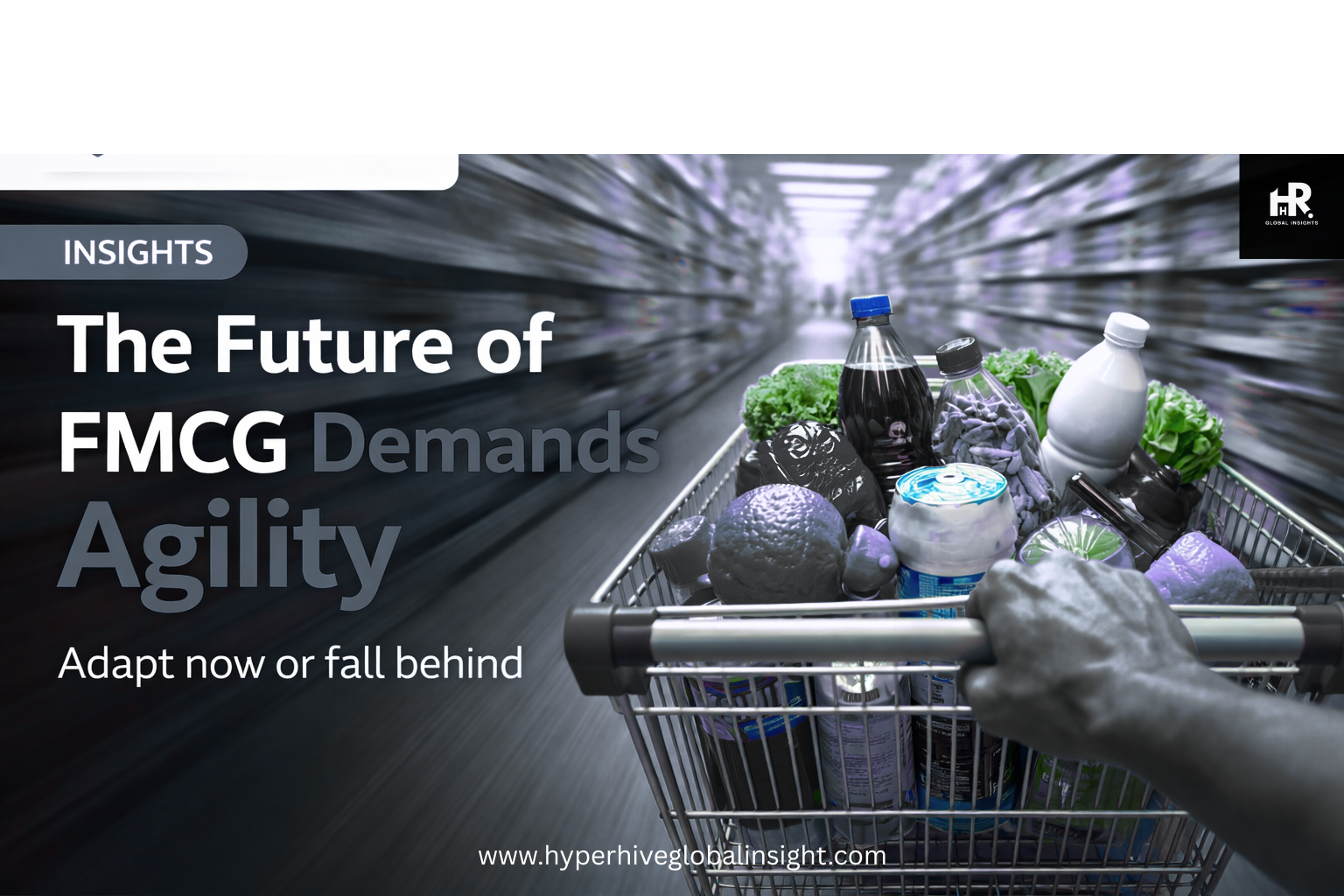
The Fast-Moving Consumer Goods (FMCG) sector is entering a new era—one where traditional advantages such as scale, distribution strength, and brand legacy are no longer sufficient to sustain long-term growth. Instead, the competitive landscape is being reshaped by a more complex interplay of evolving consumer expectations, digital acceleration, and structural market pressures.
Today’s consumer is not only more informed but also more intentional. Purchase decisions are increasingly influenced by a combination of value, convenience, personalization, and purpose. This shift is forcing brands to move beyond broad segmentation toward hyper-relevant, need-state driven engagement.
Mass-market strategies are losing effectiveness as demand splinters across micro-segments. Winning brands are those that can identify, prioritize, and serve these segments with precision—often in real time.
The traditional path-to-purchase has been replaced by a dynamic, omnichannel ecosystem. Digital commerce, quick commerce, and offline retail are now deeply interconnected, requiring brands to orchestrate seamless and consistent experiences across touchpoints.
While opportunities for growth remain abundant, the ability to execute at speed has emerged as the primary differentiator. Organizations that are structurally slow or reliant on legacy processes are finding it increasingly difficult to compete.
In this environment, intuition-led decision-making is no longer sufficient. High-quality, real-time insights have become critical to understanding evolving behaviors and anticipating shifts before they fully materialize.
Hyper Hive Global Insight plays a pivotal role here—enabling organizations to decode complex consumer signals and translate them into actionable strategies.
Agility is no longer a differentiator—it is a baseline requirement. Leading organizations are embedding agility into their operating models, enabling faster decision cycles, iterative innovation, and continuous optimization.
The pace of change has compressed the window for strategic action. Companies that move early are not just capturing share—they are actively shaping category dynamics and setting new benchmarks for the industry.
Delayed adaptation does not merely result in missed opportunities; it leads to structural disadvantages that are difficult to reverse. Brands risk losing relevance in the eyes of consumers and becoming reactive rather than proactive players in the market.
The next phase of growth in FMCG will not be driven by incremental improvements, but by a fundamental rethinking of how brands operate, engage, and compete.
Winning organizations will be those that:
With the support of Hyper Hive Global Insight, organizations can move beyond observation to action—transforming uncertainty into opportunity and insight into sustained competitive advantage.